

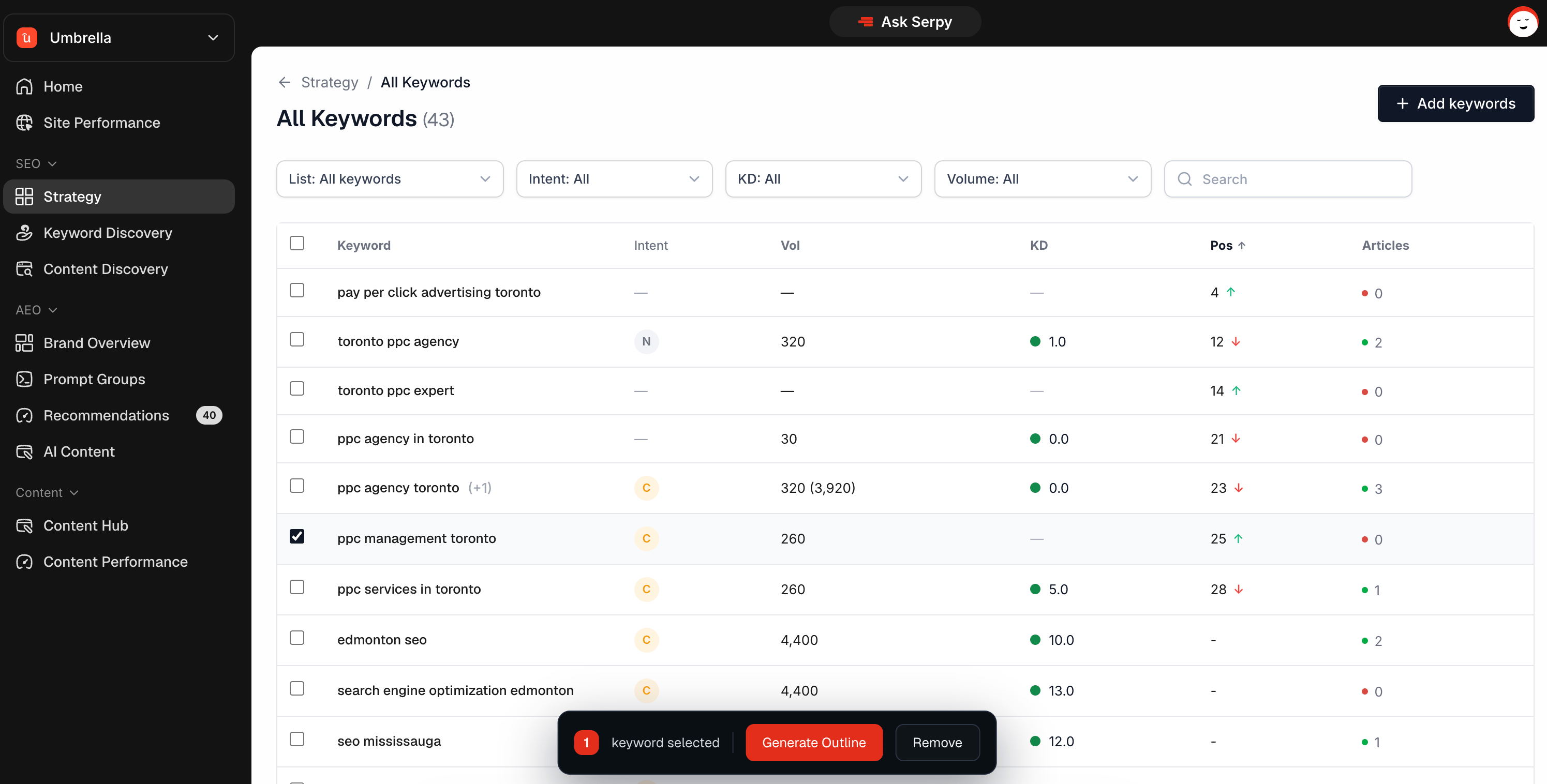
What strategy keywords are for
Use strategy keywords to organize your SEO and content focus. Good strategy keywords can include:- services
- products
- categories
- locations
- customer problems
- buying-intent topics
- SEO services
- ecommerce SEO agency
- CRM for small businesses
- Toronto web design
- project management software
Adding keywords
You can add keywords from areas such as Keyword Research or other keyword workflows in Serpy. When you add a keyword to Strategy, it becomes part of the keyword set you want to track and plan around.Keyword limits
Your plan may include a limit for strategy keywords. Keep your keyword list focused on topics that matter. Avoid adding every possible keyword. It is better to track a smaller set of useful keywords than a large list of low-priority ones.Reviewing keywords
When reviewing strategy keywords, look for:- keywords tied to your main services or products
- keywords with realistic opportunity
- keywords that connect to existing content
- keywords that could support future articles
- keywords that belong in a topical cluster
Creating content from keywords
You can use a strategy keyword to generate an outline. This helps turn a keyword into a planned article or page. Before generating content, make sure the keyword is specific enough and matches something your audience would search for.Recommended workflow
A simple keyword workflow is:- Add important keywords to Strategy.
- Review the keyword list.
- Identify high-priority topics.
- Open a keyword for more detail.
- Generate an outline when the keyword is worth targeting.
- Create and optimize the content.